

Executive Summary
Legal AI in Romania is entering a different stage. It is no longer discussed only by technology enthusiasts; it now appears in institutional initiatives, professional debates, and organized education. For lawyers, the important signal is not that a particular model can produce an impressive answer. The more useful question is whether tools are beginning to fit real legal work: reviewing a matter, conducting research, drafting a contract, and preparing a document that a legal professional can examine.
This article examines four distinct markers of legal-AI maturity in Romania: professional interest, clarification of legal-service boundaries, institutional progress, and integration into legal work. No single marker proves broad adoption; together, they help firms assess progress while keeping lawyer review and decision-making in view.
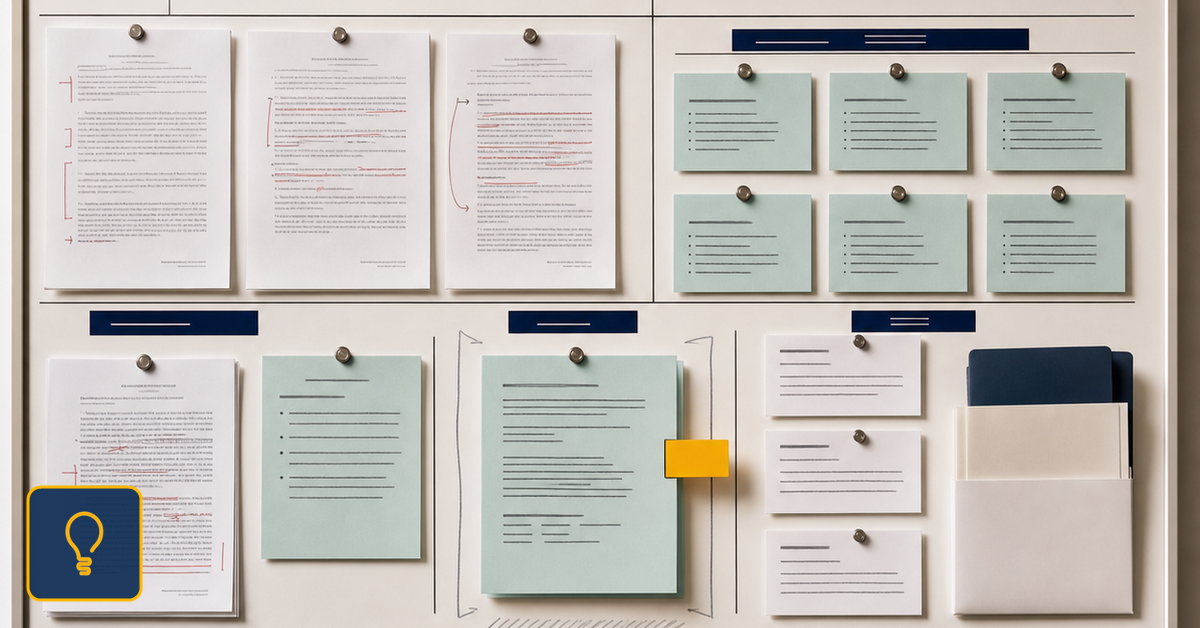
Selected context
The lawyer chooses the matter context and documents before the draft begins.
Structured drafting
The work moves through visible steps instead of a loose prompt exchange.
Final review
Professional judgment stays with the lawyer before client use.
Why Workflow Control Matters
The first signal to watch is the difference between attention and adoption. UNBR reported more than 4,000 in-person and online participants at its June 2026 conference on lawyers, technology, and professional guarantees. Dedicated AI workshops for lawyers also indicate that the subject has entered organized professional learning. This evidence supports a claim about market attention, but it does not establish how many firms actively use AI, how much they spend, or which commercial approach they support.
A second signal is the move from general discussion to precise professional questions. The Romanian debate now includes the boundary between general legal information and individualized legal advice, as well as prospective criteria for lawyers using AI. These discussions should not be described as definitive, binding AI-specific rules. They nevertheless show that service architecture, intended users, and the lawyer’s role are becoming market questions rather than minor technical details.
A Familiar Legal-Work Scenario
A third signal comes from the justice system. Romania’s announced cooperation concerns needs assessment, diagnostic reporting, stakeholder consultation, and the possibility of pilots. It does not mean that Romania has adopted a final national judicial-AI strategy or widely deployed AI in courts. Lawyers can look for concrete public milestones instead: published diagnostic work, meaningful consultation, defined objectives, and any proposed pilot with its scope and limitations clearly explained.
A fourth signal is the evolution of digital legal infrastructure. Legal AI belongs within the broader DigitalJustice@2030 direction, the European e-Justice strategy, and the digitalization of cross-border judicial cooperation. Electronic access, interoperability, and digital communication may gradually alter procedural expectations. Implementation will not happen through a single switch or on one date for every proceeding. Firms should monitor the relevant instruments, implementing measures, decentralized systems, and operational dates separately.
Where Wisanna Fits
These developments suggest a better test for legal technology: does it fit the work being performed? A firm can ask whether a product can work with relevant documents, whether its output remains editable, whether the route from analysis to document is understandable, and whether the lawyer can decide what should be retained. Fluent output is only a feature. Professional value emerges when a tool contributes to a defined legal task without making its result automatically correct or final.
Consider a concrete example. A lawyer is preparing a risk note on a termination clause in a commercial contract. The lawyer selects the contract, relevant correspondence, and permitted prior material, then applies that material to the current legal task. AI Chat can assist with questions and analysis, while Wisanna Draft can help prepare an editable legal document. The lawyer checks the result against the documents, corrects the analysis, and approves the note or decides whether particular language should be reused.
That path illustrates Wisanna’s role. Wisanna provides lawyers with a private and secure legal-AI workspace designed around professional legal work. Its current public surfaces include AI Chat, a Microsoft Word add-in, and the Wisanna Draft module for editable legal documents. It may assist with drafting, document analysis, research, and structured legal work, but no output should be treated as automatically correct or final.
A Practical Evaluation Test
A second example begins with contract review inside Microsoft Word. Through the Wisanna add-in, a lawyer can work in the document, ask questions about clauses, and continue editing in a familiar environment. The important criterion is not merely how quickly text appears, but whether the document, analysis, and professional decision remain connected. Lawyer review is one control point; the broader market lesson is that AI becomes useful when it fits an identifiable legal task.
Romanian lawyers should therefore watch four categories of signals: organized professional education, clarification of legal-service boundaries, measurable stages in institutional initiatives, and product fit with legal work. Conference participation shows interest; a published diagnostic shows institutional progress; digital infrastructure shows direction; and a coherent workflow shows practical usefulness. As legal AI becomes mainstream, the decisive question will not be only “what can it generate?” but “how does it belong in a lawyer’s work?”
Try Lawyer-Controlled Legal AI Workflows
See how Wisanna helps lawyers organize documents, drafting, review, and final approval inside a professional legal AI workflow.
See Wisanna's lawyer-controlled workflow